Water after rain
Wall seepage, wet basement corners, finished basement damage, and foundation crack leaks.
Water penetration helpFairfax County basement help
Basement Detective helps Fairfax County homeowners diagnose where water is entering, why moisture keeps returning, and which waterproofing, drainage, sump pump, or mold cleanup path fits the home.
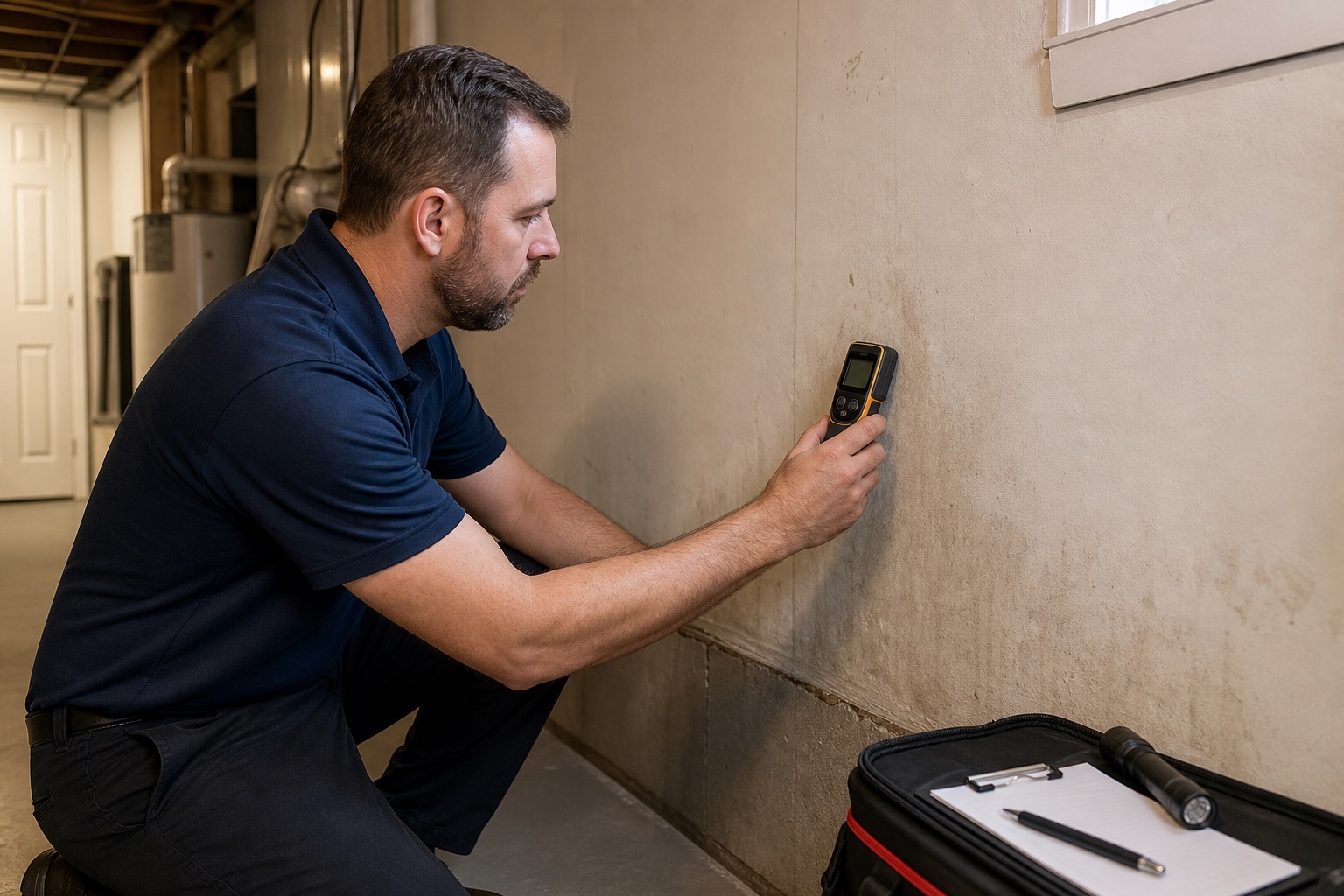
Fairfax basement problems
Wall seepage, wet basement corners, finished basement damage, and foundation crack leaks.
Water penetration helpMoisture clues that may be hidden behind finished walls, flooring, storage, or utility areas.
Musty smell helpInterior drainage, sump pump performance, backup risk, and recurring stormwater intrusion.
Waterproofing servicesMusty smells, damp materials, and mold concerns that show up after a basement leak.
Storm leak guideFairfax County water diagnosis
Basement Detective connects water penetration, musty smells, sump pump limits, French drain needs, and foundation crack leaks to the right waterproofing path.
Rain, humidity, and mold prevention
Separate water entering after rain from moisture in the air. Note where dampness starts, whether it follows a storm, and any humidity reading you already have. A dehumidifier can reduce air moisture, but recurring seepage needs its water source traced before a repair is chosen.
Photograph the first wet spot from a dry, safe location. Note whether it starts at a crack, the wall-floor joint, a window well, or near the sump. Fairfax County's drainage guide identifies gutters, downspouts, grading, stairwell drains, and sump performance as checks for wet basements. For water along the basement perimeter, see why water appears at the wall-floor joint. For a pump that runs nonstop, see sump pump running after heavy rain.
Read Fairfax County's drainage guideEPA recommends keeping indoor relative humidity below 60%, ideally 30–50%. An existing humidity reading can help describe the problem; it cannot identify a hidden leak or prove that materials are dry. Mold prevention also requires fixing the water or moisture problem. If the smell returns after rain or remains in one room, see how we investigate musty basement smells. Avoid opening finished walls or disturbing suspected mold while collecting clues.
Read EPA's moisture guidanceInclude these observations and your ZIP code when you request a Fairfax County assessment. The inspection determines which drainage, crack repair, sump, waterproofing, or moisture-control approach fits the findings.
Fairfax County FAQs
Basement Detective serves Fairfax County homeowners from its Alexandria base, with assessments for basement leaks, waterproofing, drainage, sump pump, and mold moisture concerns.
Include your ZIP code, where water appears, whether it happens after rain, sump pump status, odor details, and photos if available.
No. The right path can be sump pump work, interior drainage, crack leak repair, waterproofing, mold cleanup, or a combination depending on where water enters.
A dehumidifier can help reduce air moisture, but mold prevention also requires fixing leaks and other moisture sources. EPA recommends indoor relative humidity below 60%, ideally 30–50%. Recurring seepage or a persistent musty smell calls for investigating the source, not relying on a humidity reading alone.
Fairfax County assessment
Call (703) 684-0860 or request a free assessment with the ZIP code, timing, photos, and the symptoms you are seeing.